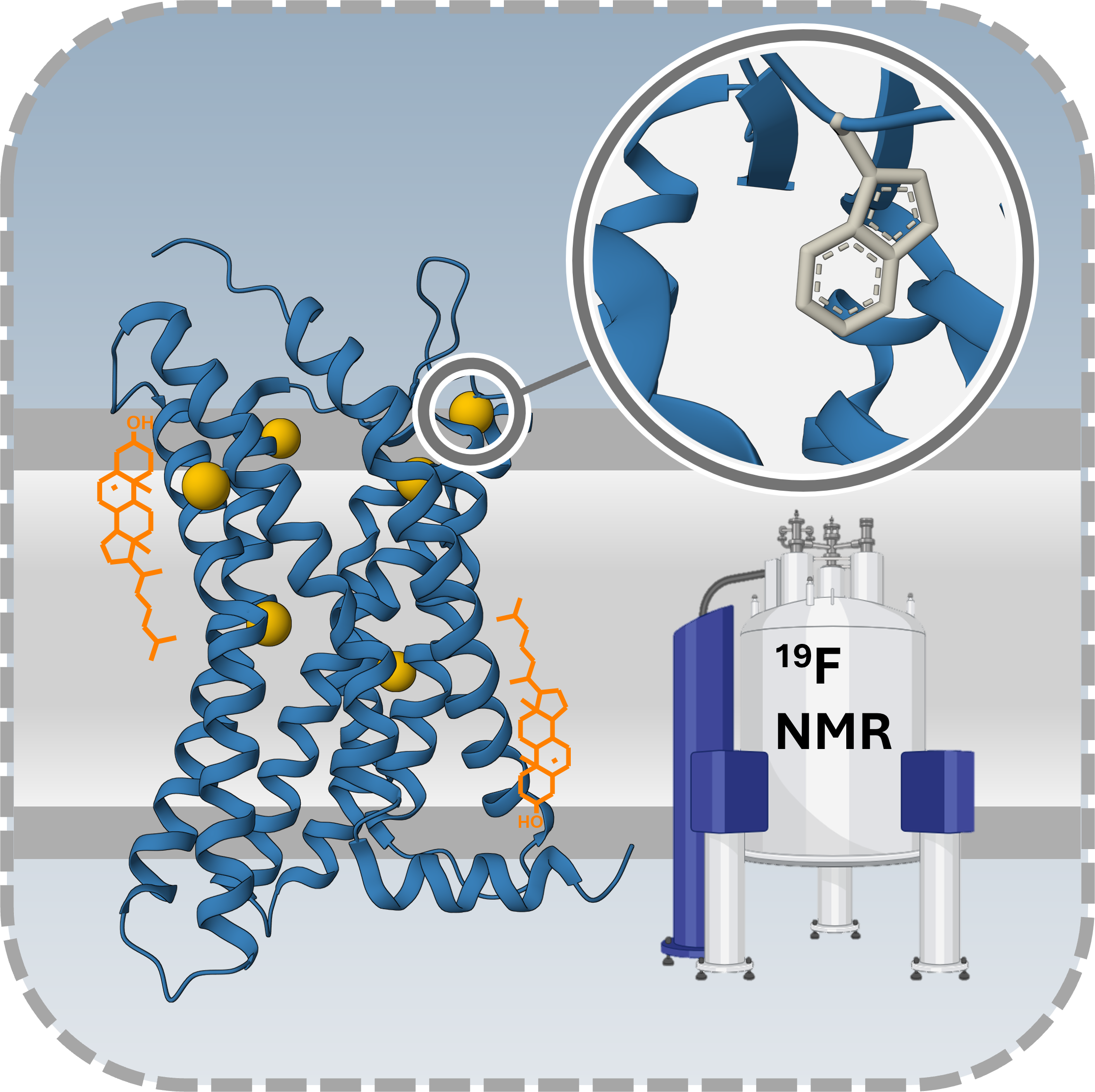
G-protein-coupled receptors (GPCRs) are important drug targets, accounting for 30% of approved therapeutic targets. However, the factors that influence their activation are not well understood. For example, cholesterol has been shown to affect the signalling of some chemokine receptors (a family of GPCRs responsible for cell motility), though the exact nature of this interaction remains unclear.
Nuclear magnetic resonance (NMR) is a technology that allows us to quantify the different activation states that GPCRs adopt and the transitions between them, as well as identify atomic interactions through space. As such, it is the ideal method with which to address this issue. Nevertheless, the features of GPCRs and NMR mean that we must utilise non-traditional methods to achieve this. ¹⁹F NMR has the sensitivity to enable us to investigate the direct and indirect effects of cholesterol on chemokine receptors.
This project marks the first cross-border collaboration between our groups, in which we will develop and utilise new and existing ¹⁹F NMR methods to reveal the role of cholesterol in regulating chemokine receptors at an atomic level. This project will further our understanding of this important family of GPCRs and open up new methodologies that can be applied to other GPCRs.
For further information about this HALRIC pilot project, please contact:
Martin Gustavsson
University of Copenhagen
martin@sund.ku.dk