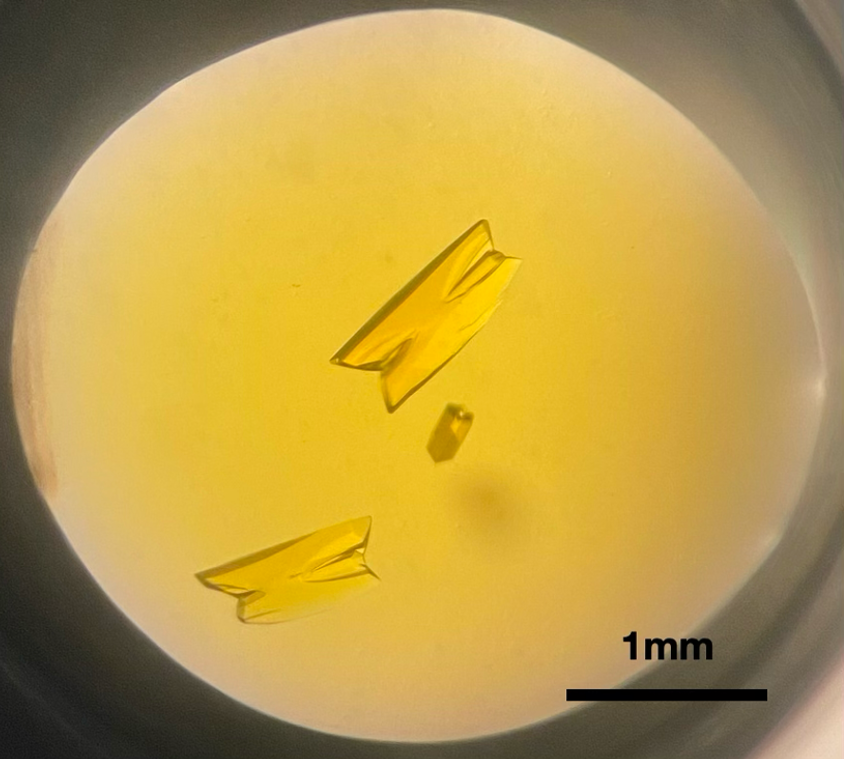
Developing novel therapeutics requires a detailed understanding of how a potential drug interacts with its protein target. Traditionally, identifying a lead compound has involved experimental high-throughput screening, but this is time-consuming and expensive. In contrast, rational drug design is efficient and economical. This method is also known as reverse pharmacology, since the first step is to identify promising target proteins.
To map the interactions of the drug in the binding site of the target protein exactly, structural biology, particularly X-ray crystallography, is a key tool. However, to optimise the lead compound further, it is often crucial to understand the protonation states of either the protein or the ligand, which X-ray crystallography generally cannot achieve. Neutron crystallography (NC) is therefore potentially interesting for many structure-based drug design (SBDD) projects. However, due to the weak neutron sources currently available, it has often not been practically feasible.
The development of neutron sources and instrumentation is changing this situation. Nevertheless, the lack of adapted platforms and pipelines still hinders the use of neutron crystallography in SBDD. The NMX macromolecular diffractometer instrument at the European Spallation Source (ESS) expands the possibilities for neutron-based SBDD further, and we therefore aim to exploit this potential fully for drug discovery targeting type 2 diabetes.
For further information about this HALRIC pilot project, please contact:
Karin Lindkvist
Lund University
karin.lindkvist@med.lu.se