Galectin-3, a key inflammatory protein involved in neurodegenerative diseases, has been identified by us and others as a therapeutic target due to its detrimental role in Alzheimer’s disease. We have demonstrated that inhibiting galectin-3 reduces neuroinflammation in microglia, resulting in improved memory, reduced amyloid beta (Aβ) plaque burden, and decreased inflammation in Alzheimer’s disease mouse models. Our initial findings have contributed to the development of galectin-3-targeting antibodies, which are currently being evaluated following a promising Phase Ib/IIa clinical trial. However, these antibodies have poor blood–brain barrier (BBB) permeability, so there is a need to discover small-molecule inhibitors with better central nervous system (CNS) availability.
This project aims to perform X-ray screening of small, potentially BBB-penetrable fragments against human and mouse galectin-3 in order to discover hit structures that can be optimised for galectin-3 inhibition and CNS availability. Mouse galectin-3 is included in the study as a key model species for neurodegeneration, and to ensure that any identified fragments optimise binding for both human and mouse proteins. The discovery of CNS-available galectin-3 inhibitors for use in mouse model proof-of-concept studies is critical for translating preclinical findings to human studies. This study will enhance our understanding of galectin-3 function in mice and lay the groundwork for future clinical studies targeting galectin-3 in neurodegenerative diseases.
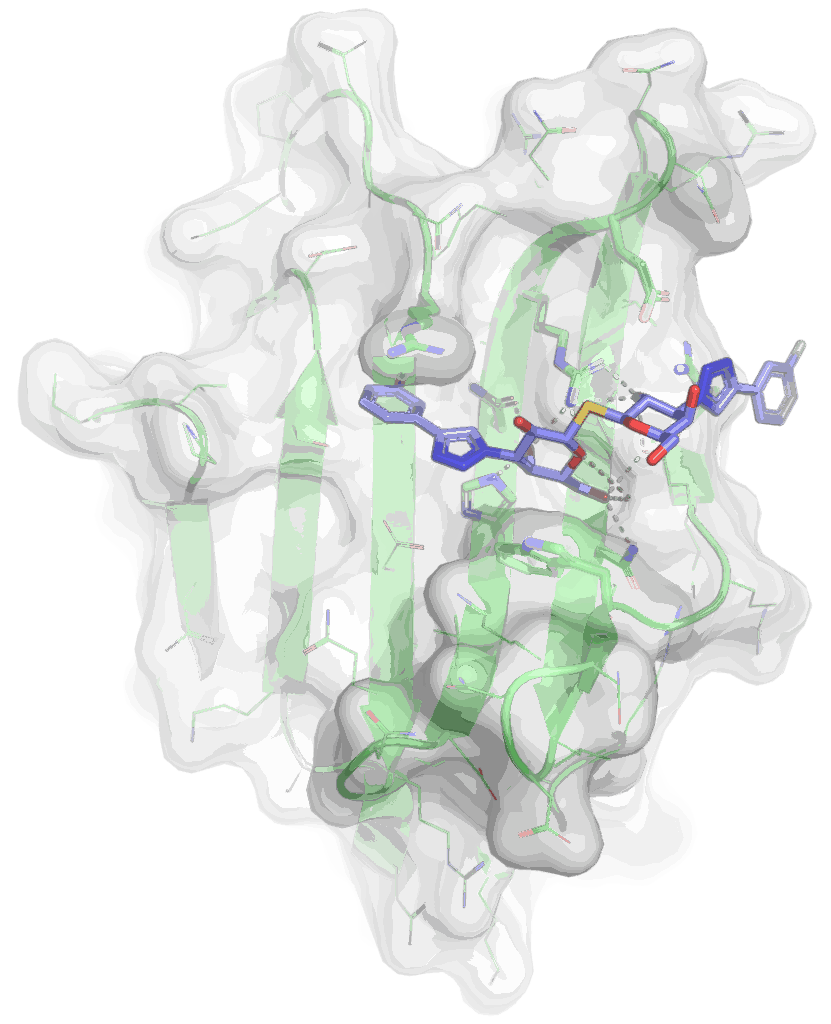
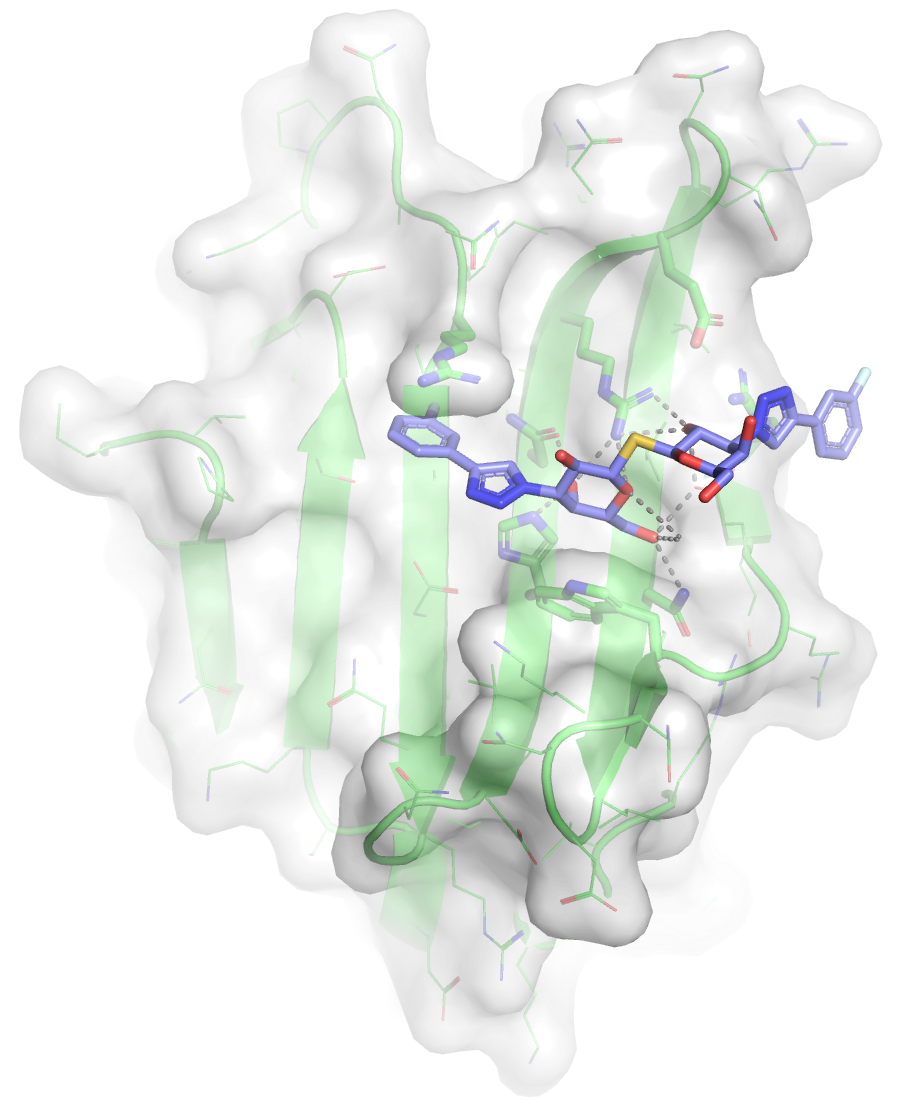
Figure: Galectin-3C protein bound to a drug-like molecule called TD139, also known as GB0139. The protein is displayed as a see-through surface. The most important amino acids interacting with the ligand are shown as thicker “sticks” while the other amino acids are shown as thinner lines
For further information about this HALRIC pilot project, please contact:
Tomas Deierborg
Lund University
tomas.deierborg@med.lu.se