Immunotherapy is revolutionizing cancer treatment by offering unprecedented long-term survival. However, its effectiveness is limited by tumour heterogeneity, drug resistance, immune evasion, and the immunosuppressive nature of the tumour microenvironment. Immune reprogramming strategies that target oncogenic transcriptional networks and enhance immune surveillance are a promising way to overcome these challenges.
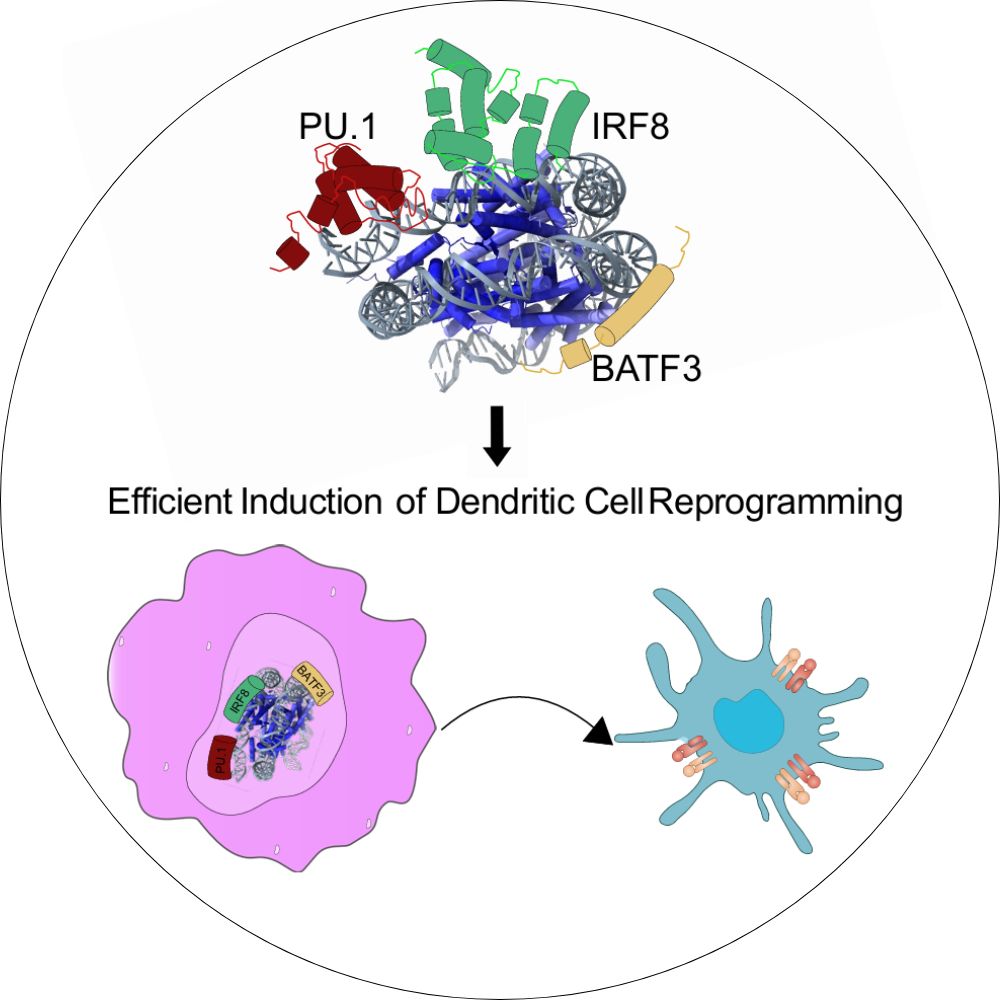
Our laboratory has demonstrated that the transcription factors PU.1, IRF8, and BATF3 (PIB) have the ability to reprogram both human and murine fibroblasts, as well as tumour cells, into cDC1-like antigen-presenting cells. This process elicits potent anti-tumour responses and renders tumours susceptible to immune checkpoint blockade in vivo. However, the efficiency of reprogramming varies across tumour types, and the structural and mechanistic basis by which PIB cooperatively engages with chromatin to drive cDC1 identity remains unknown.
The primary goal of this pilot project was to establish a workflow to understand PIB-mediated chromatin remodelling, to define transcription factor cooperativity using SeEN-seq, and to assemble the PIB-mononucleosome complex for cryo-EM. The team successfully purified histone octamers and the transcription factors IRF8 and BATF3. In parallel, MNase-seq experiments were conducted, generating high-quality data on nucleosome positioning. Altogether, these achievements have laid the experimental foundation for structural and mechanistic studies of PIB-nucleosome interactions. They also support the rational design of synthetic transcription factors to improve immune reprogramming and advance next-generation cancer immunotherapies.
For further information about this HALRIC pilot project, please contact:
Sandhya Malla
Lund University
sandhya.malla@med.lu.seFilipe Pereira
Lund University
filipe.pereira@med.lu.se