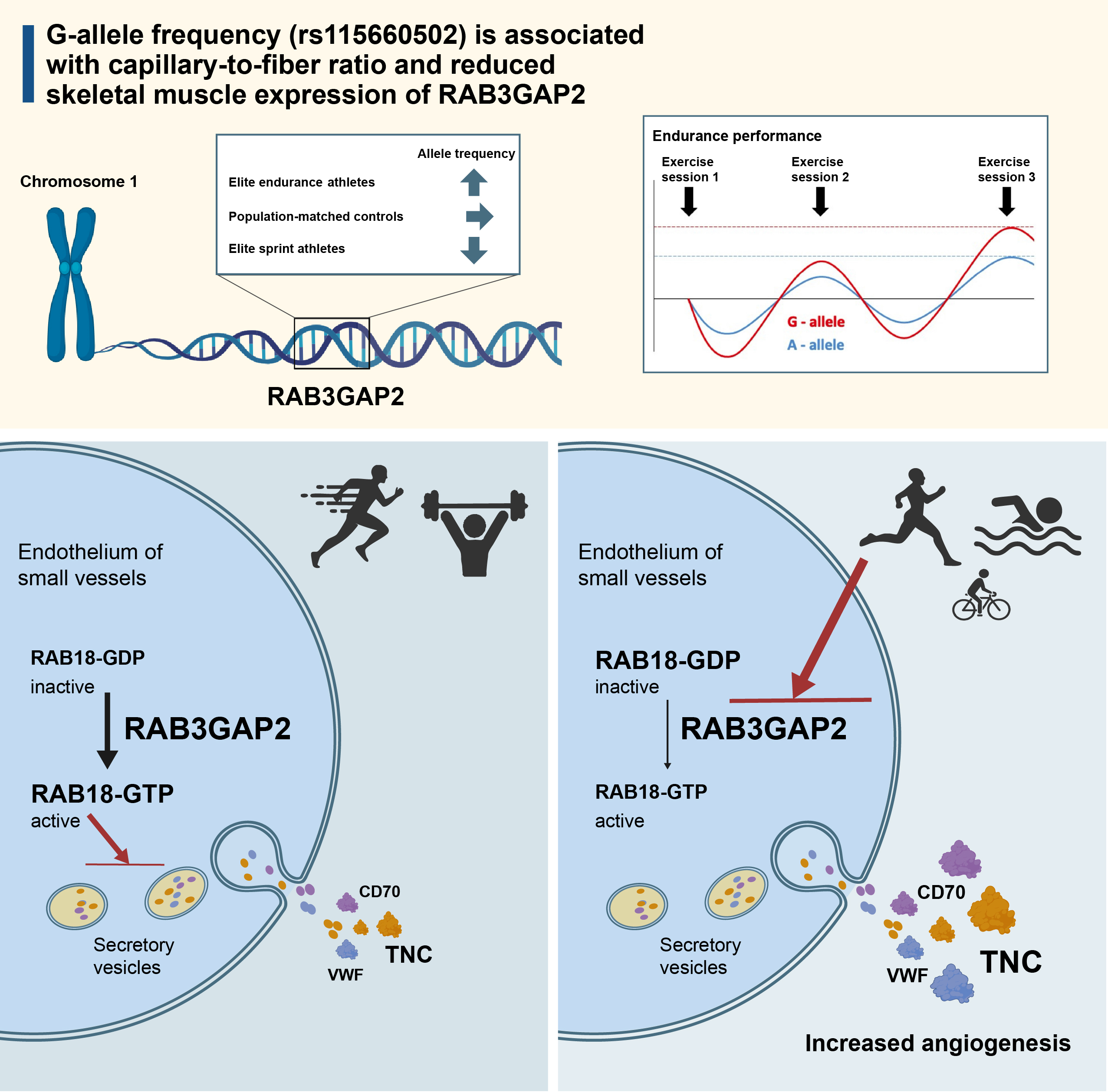
Although exercise has many well-established health benefits, including a reduced risk of diabetes and cardiovascular disease, the underlying mechanisms are not fully understood. Using a genome-wide association study (GWAS), we identified a genetic variation in the RAB3GAP2 gene associated with capillary density in skeletal muscle. The G-allele promotes the release of proteins such as von Willebrand factor (VWF), CD70 and tenascin C (TNC), which leads to capillary formation in a manner consistent with exercise. The G-allele has a different frequency in elite athletes compared to population controls. Experimentally reducing RAB3GAP2 in human endothelial cells leads to:
- increased proliferation and tube formation in vitro;
- regulation of secreted factors (e.g. CD70 and TNC), which promote angiogenesis and T-cell activation; and
- increased endothelial cell density in vivo in mice. RAB3GAP2 expression in skeletal muscle was negatively correlated with the in vivo exercise-induced release of TNC in humans.
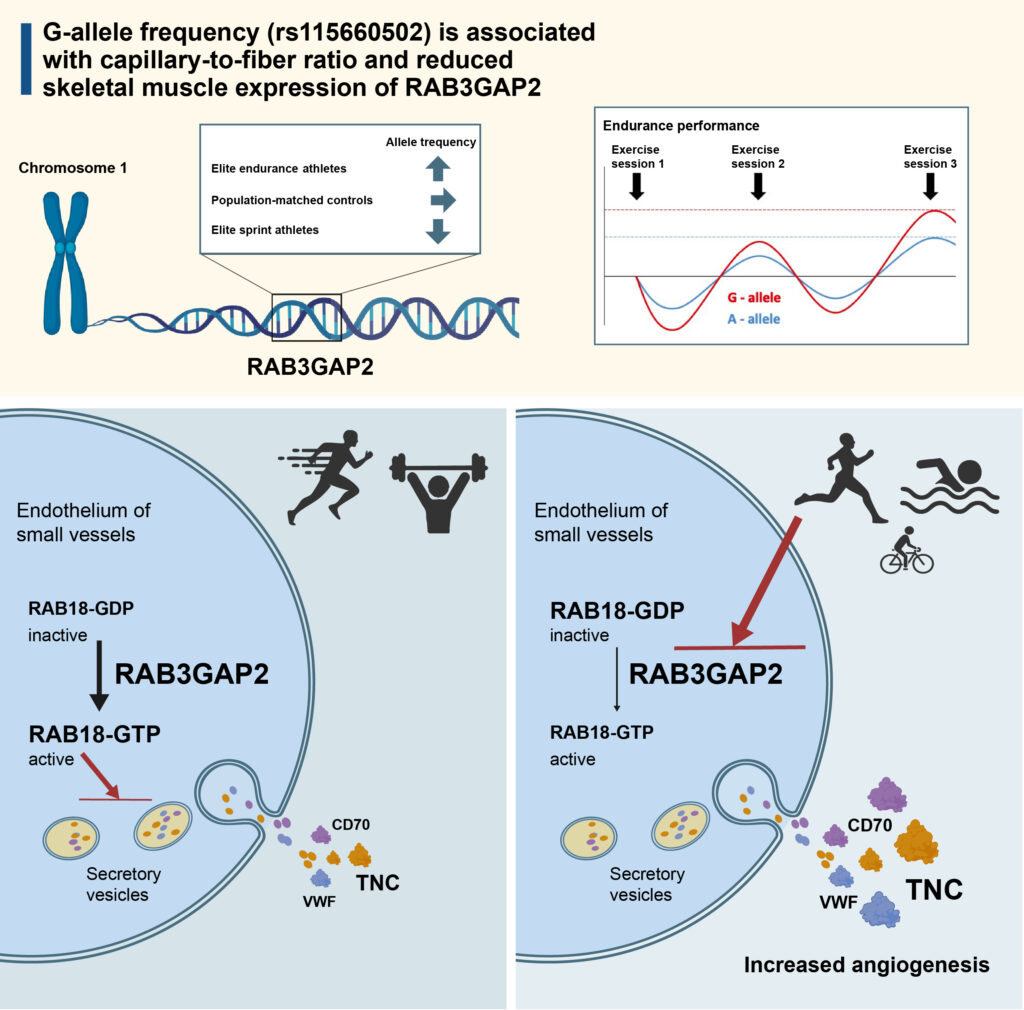
In collaboration with AstraZeneca, this pilot project will now develop a pharmacological inhibitor of RAB3GAP2 and test its efficacy in stimulating muscle health and capillarisation. This will be assessed through experiments involving human endothelial cells and an intervention study in mice, as well as a genotype-based recall intervention study in humans. This pilot project has the potential to deliver clinically transferable results by testing the efficacy of altering skeletal muscle microvascular properties through a pharmaceutical target, thereby improving muscle health.
Scientific article
February 2026 | RAB3GAP2 is a regulator of skeletal muscle endothelial cell proliferation and associated with capillary-to-fiber ratio | Cell reports
For further information about this HALRIC pilot project, please contact:
Ola Hansson
Lund University
ola.hansson@med.lu.se