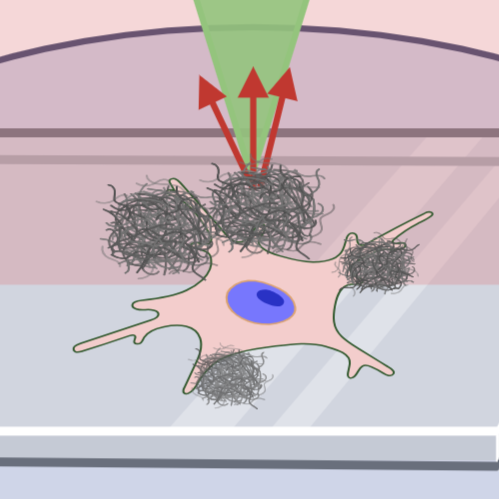
The rise of methicillin-resistant Staphylococcus aureus (MRSA) poses a significant threat to global health. The virulence and resistance of S. aureus are facilitated by the secretion of phenol-soluble modulins (PSMs), which are amyloid-forming proteins. The PSMα1 member plays a role in biofilm scaffolding and cytolysis of host cells. Our preliminary research using cryogenic electron microscopy (cryo-EM) and X-ray fibre diffraction revealed that PSMα1 forms cross-β amyloid fibrils at low pH and assembles into tubular structures with a potential cross-α architecture at neutral pH.
This HALRIC pilot project will investigate PSMα1 aggregation and secondary structure transformations in a biological context when interacting with various bacterial and human cell lines, as well as within biofilms. We will use a high-resolution approach combining micro-optical photothermal infrared spectroscopy (OPTIR) and atomic force microscopy (AFM) based on infrared nano spectroscopy, which has recently become available at MAX IV as a unique multiscale IR platform.
This combination of methods will enable us to analyse individual fibrils interacting with different cellular and matrix components. Combining in vitro high-resolution structures with secondary structures of fibrils in their biological context will enable an in-depth mechanistic description of PSMα1’s virulent functions. This project will contribute to our understanding of the mechanisms of amyloid toxicity, as well as to the development of novel anti-virulence strategies against MRSA.
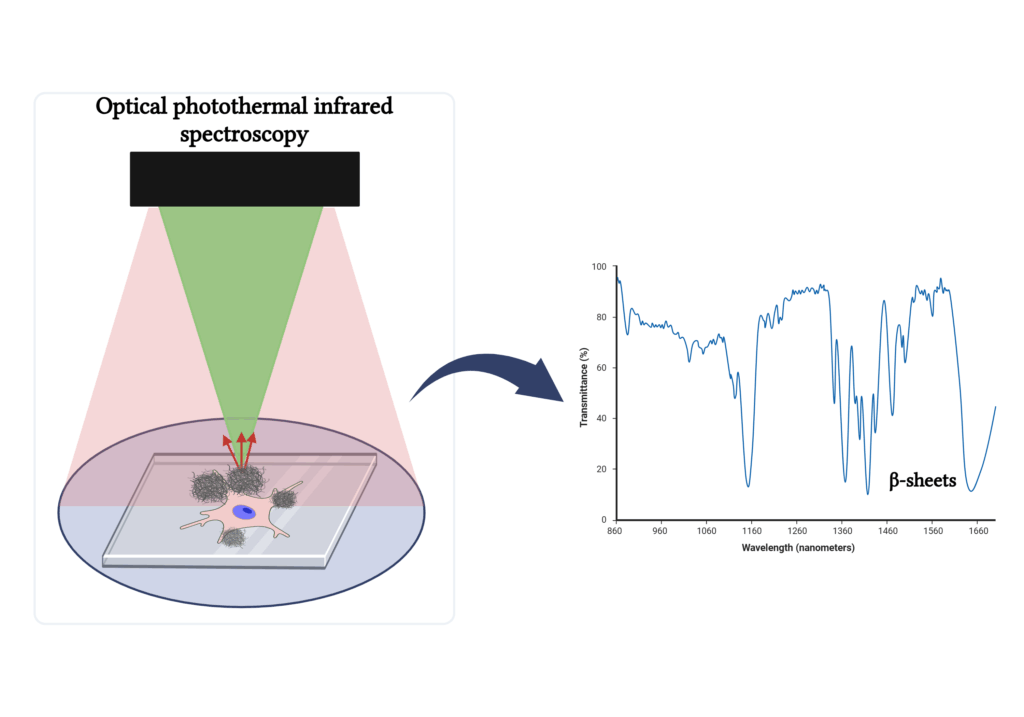
High-throughput analysis of PSMα1 conformations in cellular interactions. Created in BioRender. Landau, M. (2025).
For further information about this HALRIC pilot project, please contact:
Sambhasan Banerjee
Centre for Structural Systems Biology at DESY
sambhasan.banerjee@cssb-hamburg.de