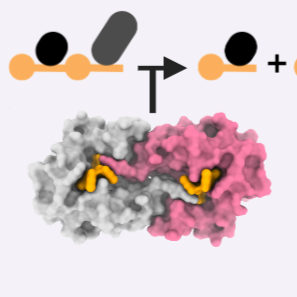
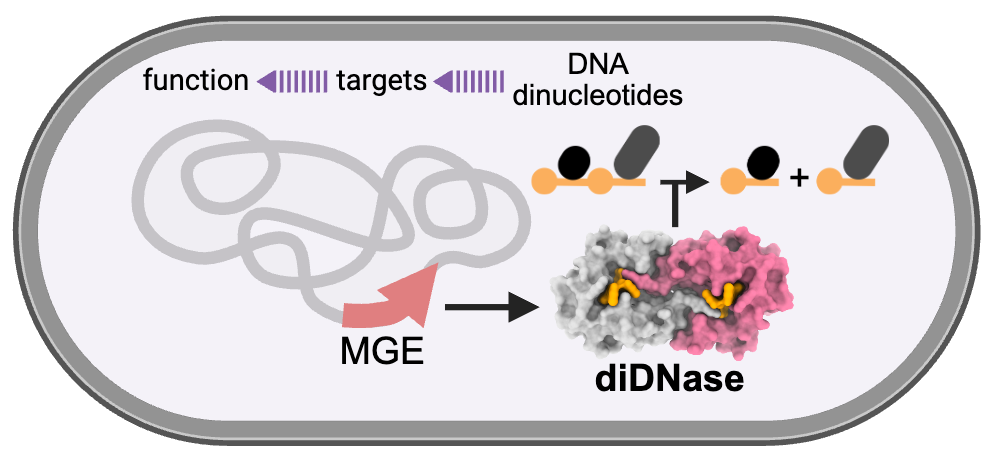
Bacteria are constantly challenged by viruses called phages. In order to survive, bacteria have evolved a variety of mechanisms to combat phage infections, which are often encoded in mobile pieces of DNA known as mobile genetic elements (MGEs). MGEs often contribute to the ‘dark proteome’, which contains genes for proteins that have not yet been characterised and which have the potential to act in bacterial immunity. However, their cellular functions remain enigmatic.
We recently discovered MGE-encoded proteins that function as DNA dinucleotide-specific nucleases (diDNases) in several bacterial species. Given their location on MGEs and their genetic context, it is likely that diDNases play a role in bacterial immunity. Building on this insight, here we investigate the role of DNA dinucleotides in bacterial physiology and immunity. The aim of this HALRIC pilot project is to decipher the function and molecular mechanism of diDNases and diDNase-associated factors using biochemical, structural, and microbiological approaches. We will use the PETRA III beamline at DESY and the protein characterisation facility at the Centre for Structural Systems Biology (CSSB) in Hamburg to achieve this. In parallel, we will evaluate the impact of dinucleotides on bacterial processes using cell-based assays at Aarhus University (AU) in Denmark. For structure determination by cryo-EM, we will use facilities at the CSSB and AU.
This work will provide new insights into how bacteria survive in hostile environments and may even help to develop new tools for biotechnology or medicine.
For further information about this HALRIC pilot project, please contact:
Holger Sondermann
Centre for Structural Systems Biology (CSSB) at DESY
holger.sondermann@cssb-hamburg.de