Scientific abstracts are often too dense and technical for those outside specialized communities, limiting access to important research.
This project aims to develop a module powered by a Large Language Model (LLM) that adapts life science abstracts to match the user’s knowledge level, making complex biological and medical research more accessible Key to this project is optimizing prompts that guide the LLM in simplifying or detailing content accurately. Additionally, we will explore the possibility to easily provide explanations for specific terms within abstracts, tailored to the user’s expertise. It intends to serve as a valuable tool for broadening public engagement with science.
The module will be open-source, easily integrated into existing repositories, starting with the ESS repository (Publications Portal). It aligns with key European policies — such as the European Charter for Researchers, Horizon Europe’s Open Science Agenda, and Responsible Research and Innovation (RRI) — by addressing their core goals: improving research infrastructure, promoting open science and knowledge transfer, enhancing public engagement, and maximizing the societal impact of research data.
This tool addresses a critical stage in the research lifecycle: the dissemination and reuse of research data and findings. By making complex scientific research more understandable and accessible, it directly supports the publication, communication, and outreach phase, extending the lifecycle of research data beyond initial publication and maximizing its impact. The development of this tool is inherently a collaborative effort, requiring expertise from multiple fields to ensure it is scientifically accurate, technologically robust, and user-friendly.
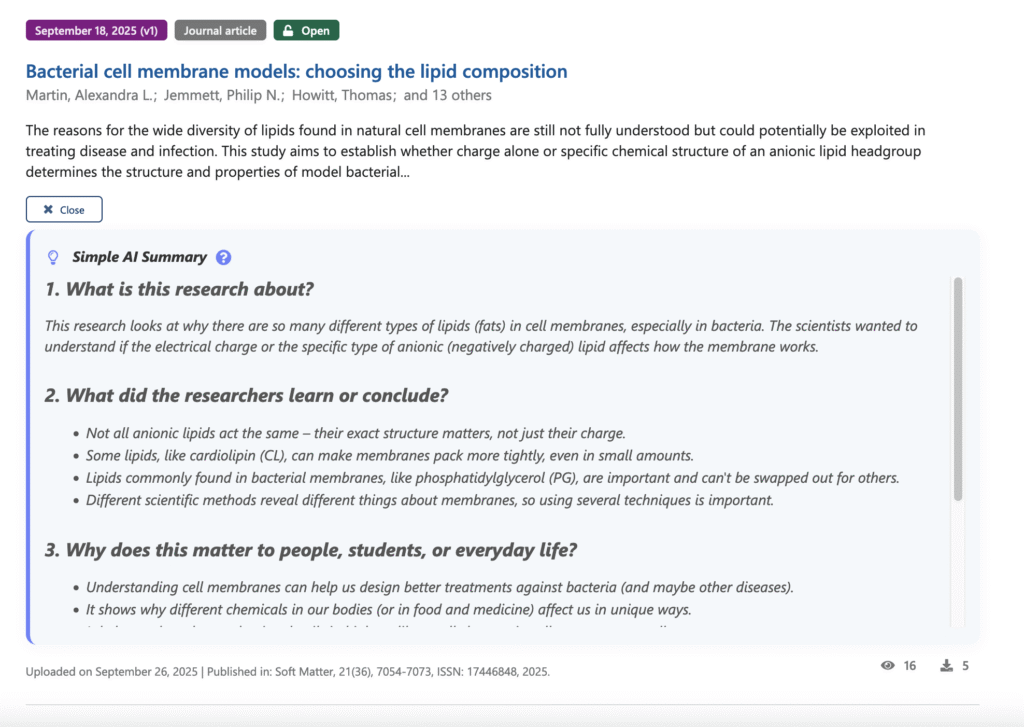
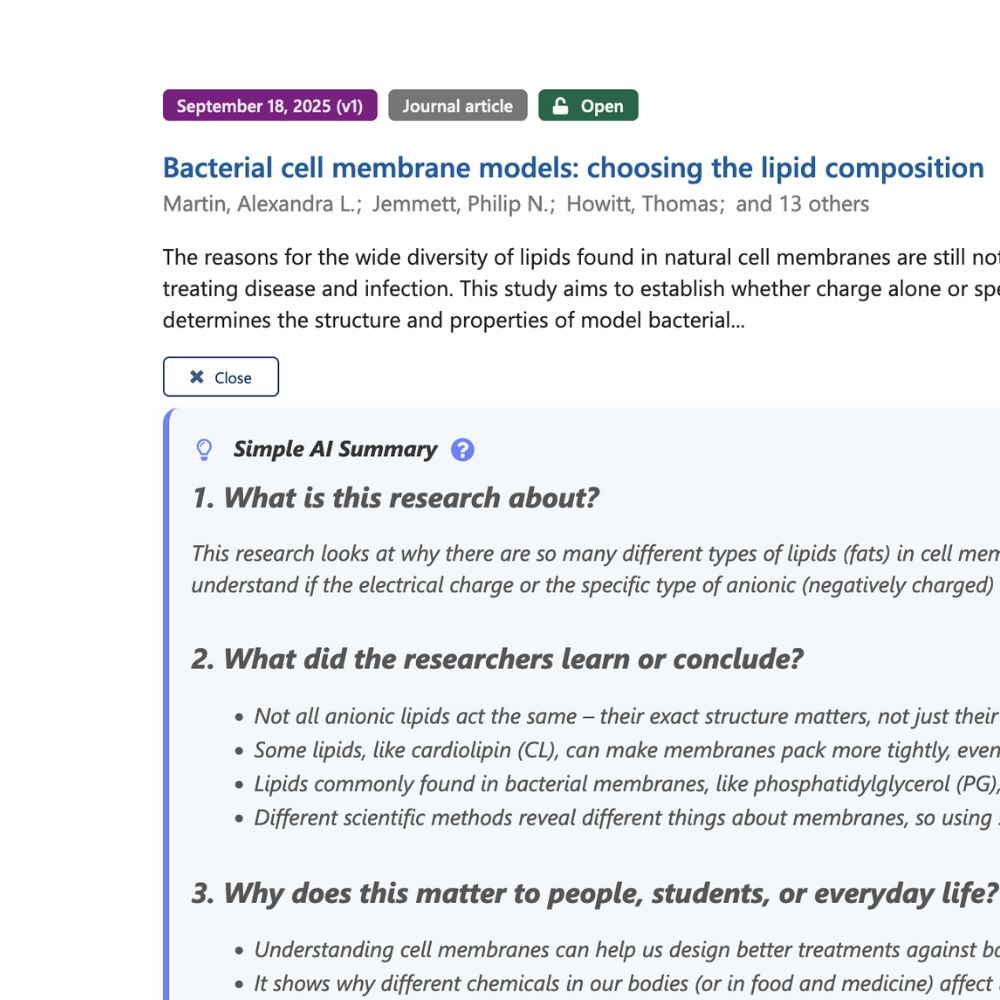
Example of a life science abstract made more accessible.
For further information about this HALRIC pilot project, please contact:
Fredrik Eriksson
European Spallation Source
fredrik.eriksson@ess.eu