Cholera toxin (CT) and heat-labile enterotoxin (LT) are two similar AB5 toxins that are responsible for the diarrhea caused by Vibrio cholerae and enterotoxigenic Escherichia coli (ETEC) infections, respectively. These toxins are secreted into the lumen of the small intestine, but attack targets within the host cytosol. Upon endocytosis, CT and LT travel to the endoplasmic reticulum (ER), where their catalytic component – the A1 subunit – dissociates from the rest of the toxin. Once free, the A1 subunit naturally unfolds and is retrotranslocated to the cytosol by hijacking components of the ER associated degradation pathway (ERAD). Both steps, toxin disassembly and transport to the cytosol, involve interactions with host chaperones and are crucial for intoxication.
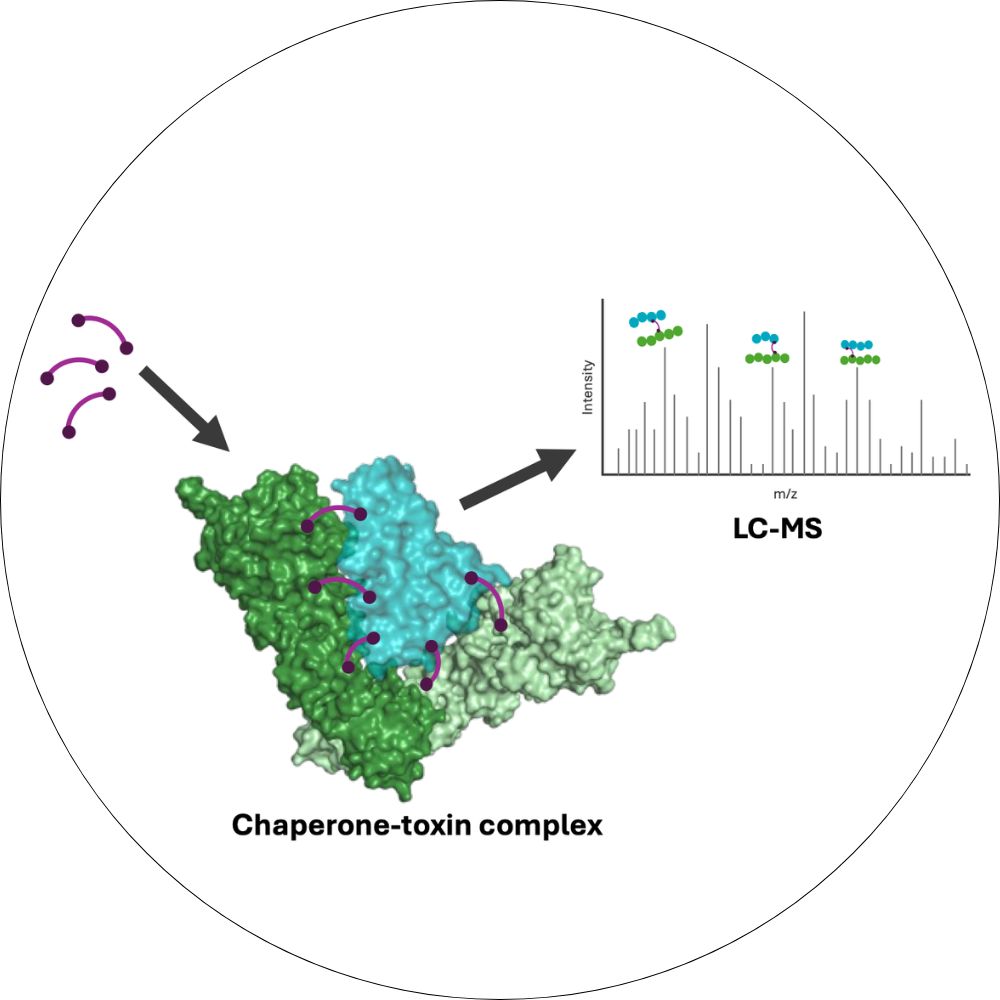
This HALRIC pilot project investigated how human chaperones bind to foreign clients such as the cholera toxin by using cross-linking mass spectrometry (XL-MS). The target proteins were produced at the University of Oslo (UiO), while protein-protein complexes were cross-linked and analysed by mass-spectrometry at the Swedish National Infrastructure for Biological Mass Spectrometry (BioMS) and the Science for Life Laboratory (SciLifeLab) Structural Proteomics unit at Lund University (LU).
The pilot project team gained initial insights into which parts of cholera toxin and host chaperones interact with each other, helping to improve our understanding of how bacterial toxins are activated in host cells.
For further information about this HALRIC pilot project, please contact:
Ute Krengel
University of Oslo
ute.krengel@kjemi.uio.no