Chronic neuropathic pain affects 7–10% of the global population and is increasing, yet current gold-standard treatments are ineffective and overly reliant on opioids, contributing to opioid use disorder and associated mortality. There is therefore a clear need for new treatments.
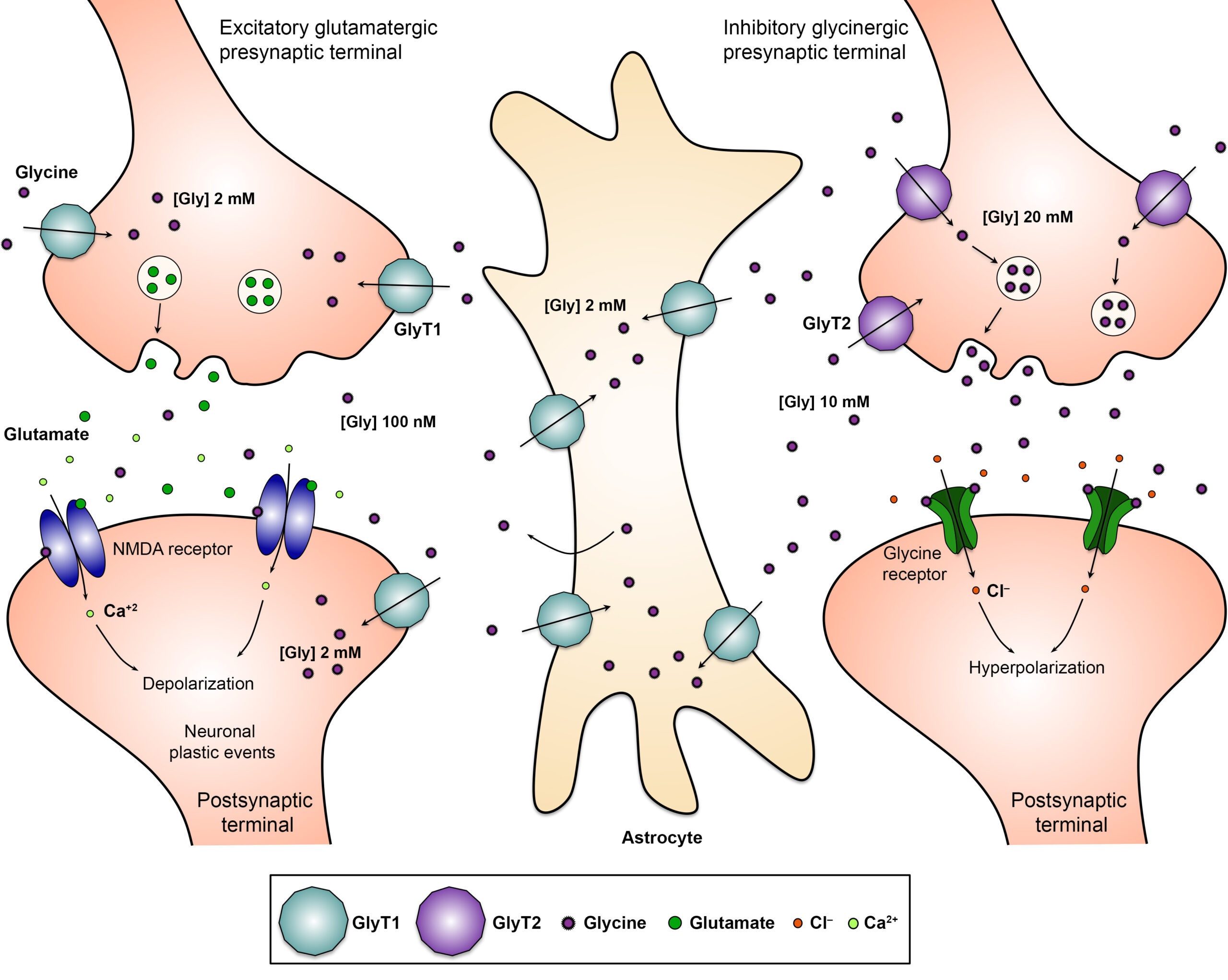
A hallmark of neuropathic pain is reduced glycine signalling, which lowers pain thresholds and causes normally harmless stimuli to be perceived as painful. Glycine is a conditionally essential amino acid with a dual role in the central nervous system. In the brain, it activates neurons by binding to NMDA receptors, whereas in the spinal cord, it inhibits neuronal activity by binding to glycine receptors. By specifically targeting glycine signalling in the spinal cord, it is possible to reduce the transmission of pain signals to the brain.
Neurotransmitter transporters, which are expressed throughout the central nervous system, are responsible for recycling neurotransmitters and terminating neuronal signalling. Glycine is recycled by glycine transporters 1 and 2 (GlyT1 and GlyT2). GlyT2 is a more attractive target for neuropathic pain, as it is primarily expressed in the spinal cord, whereas GlyT1 is expressed more broadly in the brain.
Inhibition of GlyT2 increases the availability of glycine, thereby enhancing inhibitory signalling in the pain pathway. Restoration of glycinergic signalling through pharmacological inhibition of GlyT2 has been shown to alleviate pain in several preclinical models. However, despite this promising analgesic activity, GlyT2 inhibitors have not progressed to clinical use due to significant on- and off-target side effects at effective doses.
The non-competitive GlyT2 inhibitor ORG25543, for example, provides analgesia but causes severe side effects at maximal doses, including seizures. These effects are attributed to its high affinity (IC₅₀ ≈ 20 nM) and apparent irreversible inhibition of GlyT2.
To overcome these limitations, this project combines structural biology and molecular biophysics approaches to uncover the molecular mechanisms and structural determinants of both allosteric and competitive inhibition of GlyT2.
The outcome of this research will provide a basis for identifying new therapeutic agents and developing novel strategies for effectively targeting glycine transporters. In addition, the methodological advances developed in this project will be applicable to a broad range of protein targets.
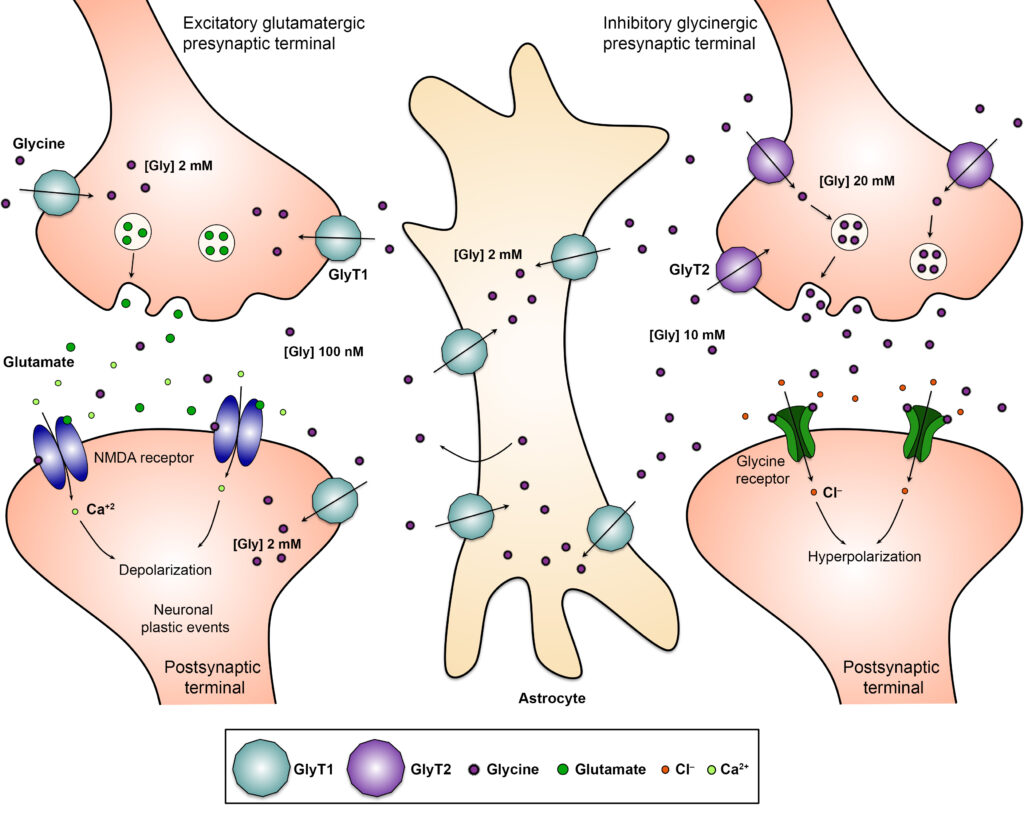
Figure 1. Glycine transporters-mediated regulation of glycine neurotransmission at excitatory and inhibitory synapses. Excitatory glutamatergic synapse (left) and inhibitory glycinergic synapse (right) are depicted. GlyT1 (cyan), and GlyT2 (purple), the main regulators of glycine concentrations and dynamics of glycine neurotransmission in the synapse, are depicted. Extracellular and intracellular glycine concentrations created by GlyT1 and GlyT2 in different locations of the synapse are shown.
Scientific publication
February 2026 | A reversible allosteric inhibitor of GlyT2 for neuropathic pain without on-target side effects | Nature communications
For further information about this HALRIC pilot project, please contact:
Azadeh Shahsavar
University of Copenhagen
ash@sund.ku.dk