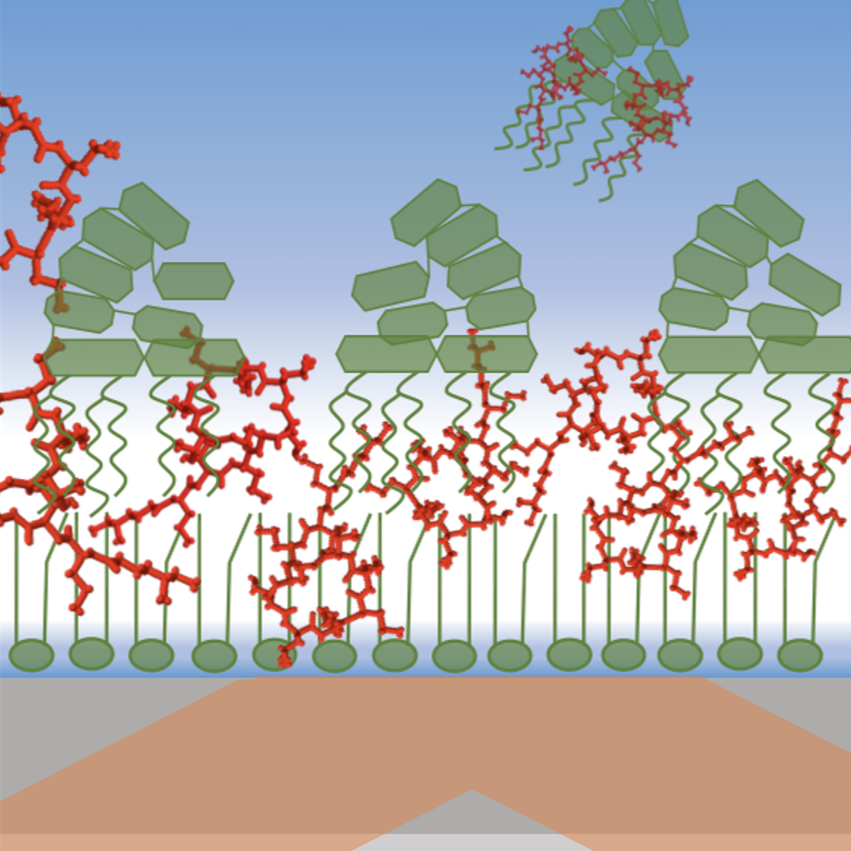
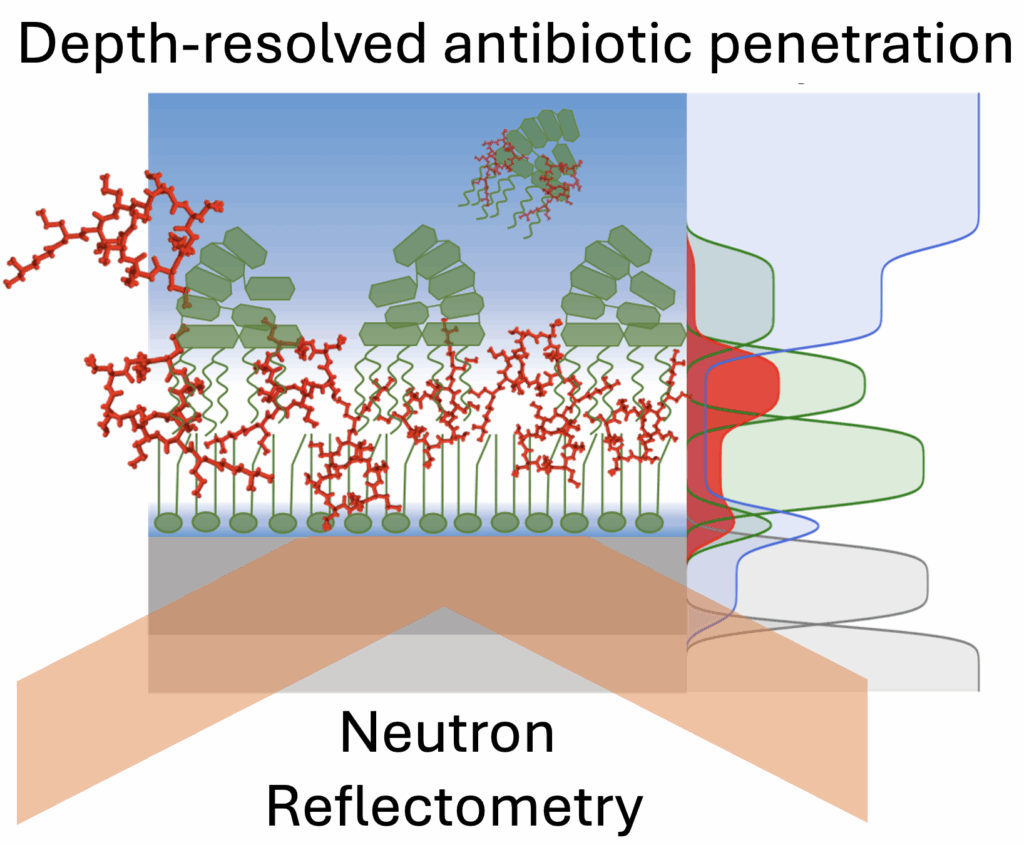
Lipopolysaccharide (LPS) is a component of the outer membrane of Gram-negative bacteria and serves as a crucial barrier against antibiotics and environmental threats. This barrier enables bacterial survival and antimicrobial resistance, which was responsible for over 6 million deaths worldwide in 2019. Resistance in clinically relevant pathogens such as E. coli, K. pneumoniae and P. aeruginosa is of particular concern. For antibiotics to be effective, they must penetrate the LPS barrier, consisting of an O-antigen, a core oligosaccharide and a lipid A component. The composition and structure of LPS molecules play a key role in bacterial sensitivity to last-resort antimicrobials.
The project aims to understand LPS interactions with antimicrobials, which is key to overcoming resistance mechanisms and developing new drugs. Due to the natural complexity of LPS, biophysical studies require the use of purified and reconstituted materials. Neutron reflectometry can probe the structure of these membranes at the nanometre range, providing detailed insights into the interaction between antibiotics and LPS. Deuterating specific components for these experiments enables precise observation of the effect of antimicrobial agents on membranes. One of the project’s goals is to establish a platform at ESS for producing novel deuterated LPS species, which will enable comprehensive biophysical studies of LPS-antibiotic interactions. This will support the development of new antimicrobial agents that target Gram-negative bacteria and will be a critical tool in the fight against antibiotic resistance.
For further information about this HALRIC pilot project, please contact:
Nicolò Paracini
European Spallation Source
nicolo.paracini@ess.eu