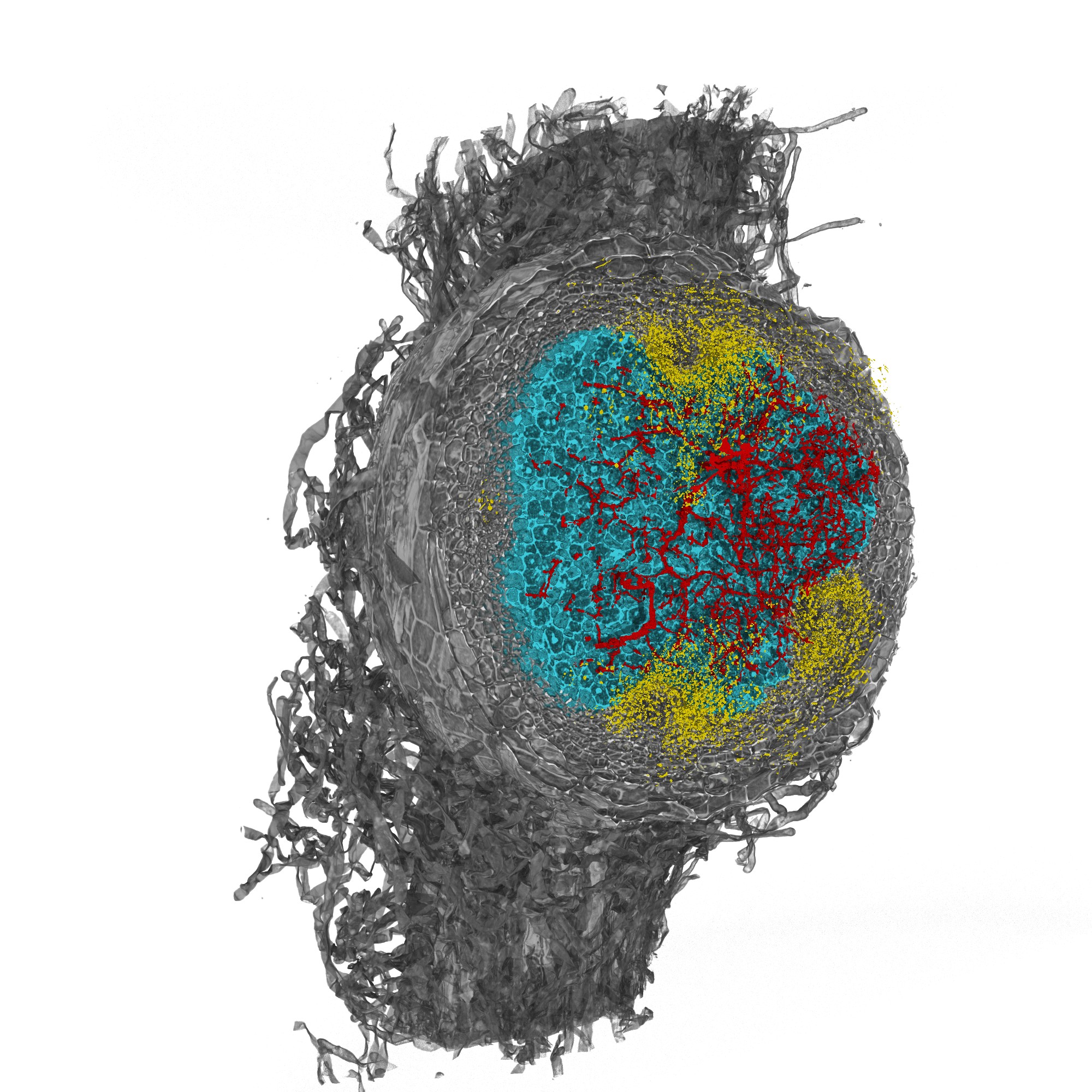
Nitrogen is essential for plant life and vital for human existence. However, plants are unable take nitrogen directly from the air and rely on bacteria capable of ‘nitrogen fixation’ to obtain this key nutrient. In legumes, this occurs directly inside root nodule organs.
The aim of this project is to explore the mechanism by which these nitrogen-fixing bacteria infect plant cells to deliver nitrogen, in order to gain a deeper understanding of the processes on which legume plants depend for their contribution to sustainable agriculture. A fast, streamlined method of acquiring 3D volumes of intact plant tissue using synchrotron X-ray phase contrast tomography techniques will be established using PETRA III at DESY. Combined with light microscopy, the tomography sample volumes will be used to study the dynamic and complex process of microbial infection from the initial passage of the plant epidermis to the colonisation of solid, compact root nodule tissue.
By combining our frontier research in the molecular biology of plants and microbes at AU with the tomography core expertise of EMBL-HH and the 3D quantification expertise of QIM-DTU, we will be able to quantify and understand the colonisation of plant tissue by microbial symbionts. The overarching goal is to develop an AI-assisted, fast, high-throughput, synchrotron-based 3D tomography for the quantitative measurement of the colonisation of plant roots by beneficial microbes, such as rhizobia, mycorrhizae, and microbiota strains, across the cell layers of intact tissues and organs.
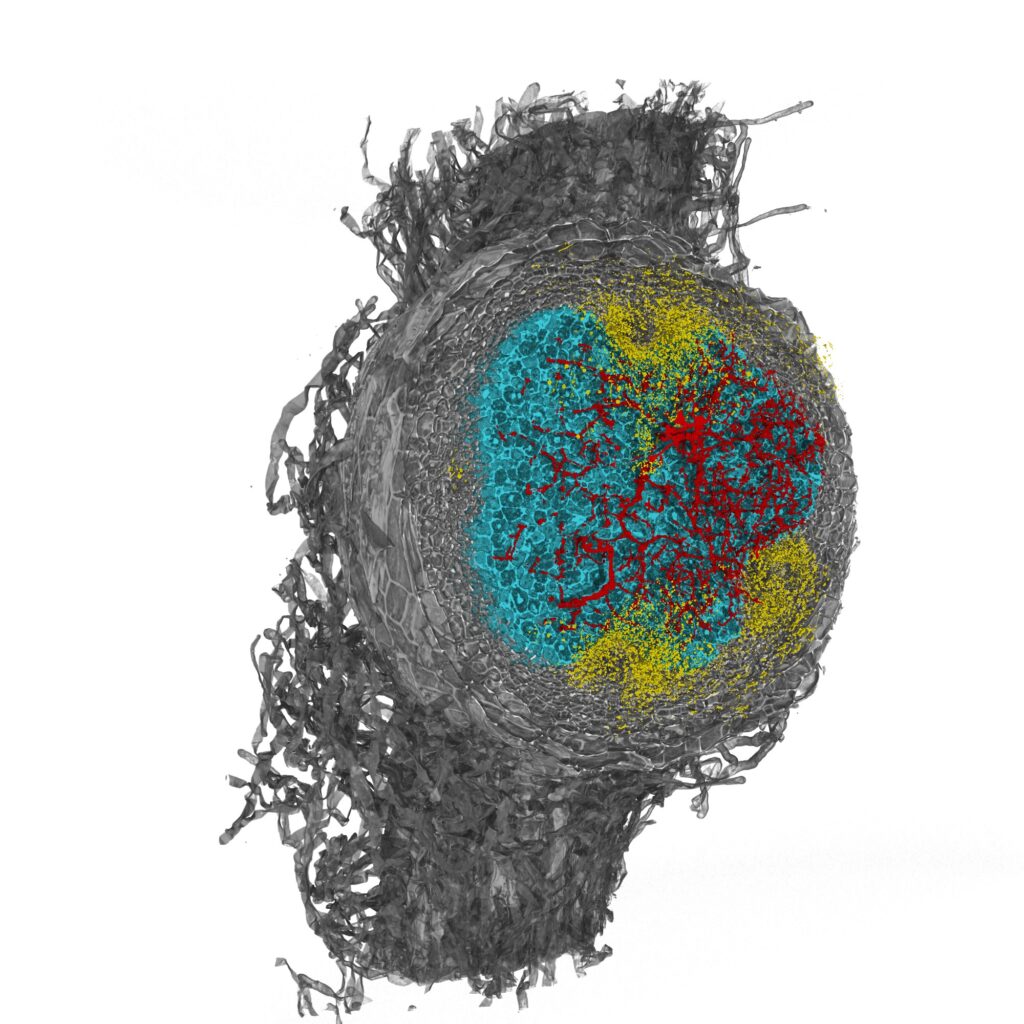
Figure: Segmented root nodule of the model legume Lotus japonicus, obtained by X-ray tomography.
For further information about this HALRIC pilot project, please contact:
Jens Stougaard
Aarhus University
stougaard@mbg.au.dk