The prevalence of antibiotic-resistant infections is increasing rapidly, and it is predicted that, by 2050, the annual number of deaths from bacterial infections will exceed the number of cancer-related deaths (ARC, 2022, The Lancet, PMCID: PMC8822221).
Alternative treatments are desperately needed, and personalised bacteriophage therapy, which uses bacterial viruses to combat infection, is an exciting and promising approach. However, in order to develop phage therapy, we must first understand how bacteria defend themselves from bacteriophages in their natural environment. Many bacterial immunity systems, including restriction-modification and CRISPR-Cas systems, recognise foreign, invading DNA via specific DNA-binding domains (Georjon and Bernheim, 2023, Nat Rev Microbiol, PMID: 37460672). Among these defence systems, those that include DNA-binding Cro domain proteins are less well studied. Cro-domain proteins are found in both phages and bacteria and generally participate in transcriptional regulation; some are also expected to play a role in phage recognition (Aggarwal et al., 1988, Science, PMID: 3187531).
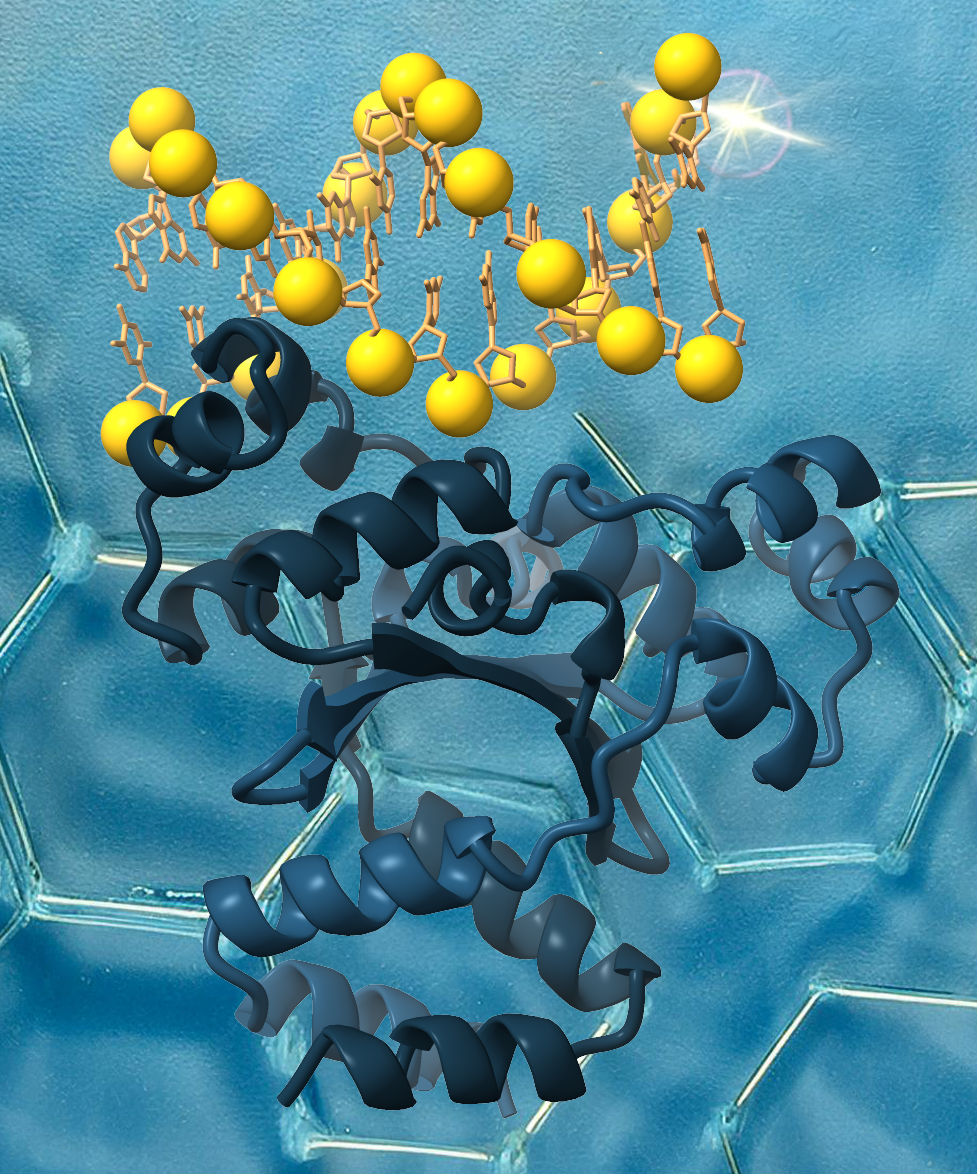
This HALRIC pilot project aims to understand how the bacterial Cro domain recognises DNA at a molecular level. This will be achieved by using the anomalous scattering properties of phosphorus and sulphur atoms to determine the structure of protein–DNA complexes. These structures will enable us to decipher phage defence and how it is mediated through DNA recognition.

Molecular model of how we believe bacterial Cro domain interacts with DNA (July 2025)
For further information about this HALRIC pilot project, please contact:
Frederik Oskar Graversgaard Henriksen
DEB-Lab, Aarhus University
fogh@mbg.au.dk