Representatives from Science City Hamburg, Innovation District Copenhagen, and Science Village Scandinavia met in Hamburg on 4–5 November 2025 to strengthen collaboration and exchange experiences on developing innovation ecosystems.
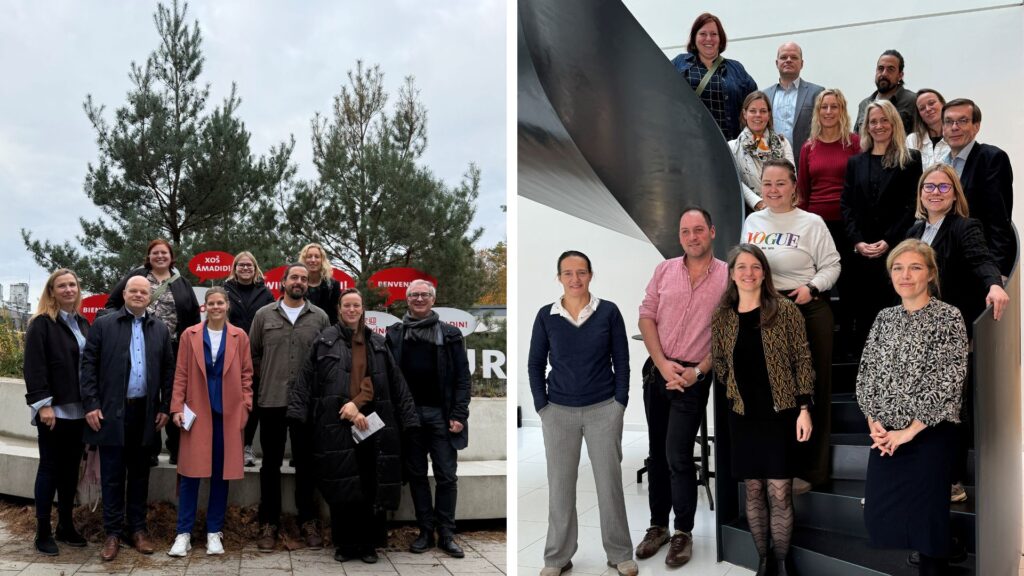 Photo: University of Hamburg (left) and Hamburg Ministry of Science, Research and Equalities (right)
Hosted by the Ministry for Science, Research and Equalities in Hamburg, the meeting marked an important milestone under HALRIC Work Package 4.2, bringing together leading innovation districts to explore how cooperation can accelerate growth and scientific collaboration across borders.
Laying the groundwork for collaboration
Over two days, the delegation from Copenhagen and Lund – including Lene Rasmussen (Head of Secretariat, Innovation District Copenhagen) and Ludvig Duregård (Programme Director, Science Village Scandinavia AB) – met with Marie-Lena Dieckmann and other representatives from Science City Hamburg.
The visit began with a tour of DESY and the University of Hamburg facilities in the heart of Science City followed by participation in the Science City Hamburg Advisory Board meeting. The second day focused on innovation and transfer, with visits to Start-Up Labs Bahrenfeld and tecHHub in the Innovation Park Altona. There, the delegation engaged also with stakeholders from Hamburg Invest and DESY, discussing innovation strategies, knowledge-transfer practices, and opportunities for continued cooperation between the three science hubs.
The goal of such meetings is to strengthen ties, share lessons learned, and explore how each science city can optimise its unique strengths to boost growth and regional success. This first site visit achieved that goal, and the partners have already agreed to continue the dialogue with future meetings in Copenhagen and Lund to further explore new synergies.
Why this cooperation matters
This collaboration exemplifies HALRIC’s mission to connect science and innovation actors across borders, enabling researchers, start-ups, and investors to work together more effectively and turn world-class research into tangible impact.
Each innovation district brings unique strengths to the table, forming a strong foundation for mutual learning and joint progress:
- Science City Hamburg is rapidly developing into a world-class research and innovation district, integrating physics, chemistry, biology, medicine, and start-up ecosystems within an urban setting that fosters collaboration and creativity.
- Innovation District Copenhagen is emerging as one of Europe’s next beacons in life sciences and quantum technology, connecting universities, businesses, and start-ups to build a globally competitive innovation hub.
- Science Village Scandinavia in Lund is shaping a next-generation innovation district anchored by world-leading research facilities such as MAX IV Laboratory and the European Spallation Source (ESS), driving breakthroughs in materials science, energy, and life science innovation.
A special thanks to Sarah Marshall-Bensch and Klaus von Lepel from the Hamburg Ministry, whose efforts made this meeting possible. By sharing experiences and exploring synergies, the three hubs are building a more interconnected and resilient innovation ecosystem across the Öresund–Kattegat–Skagerrak–Hamburg region.